.webp)
The Slow Collapse of the Van der Linde Gang as an American Tragedy
 1. Before the Beginning: Foundations of a Family Built on Sand
The Van der Linde gang never began as a criminal empire. In its earliest days, the gang was a loose collective of outsiders drifting together more out of shared rejection than shared ambition. Dutch, Hosea, and a young Arthur created a space where misfits could survive without bending to society’s rigid expectations.
Dutch’s philosophical ideals — freedom, self-determination, living outside the law — were attractive because they offered emotional refuge to people the world had cast aside. These ideas weren’t merely spoken; they were used as moral glue. The early gang moved from town to town, stealing just enough to survive, performing small-scale robberies more rooted in survivalism than grand rebellion.
Even then, the seeds of downfall were present. Dutch believed that charisma was leadership, that vision was strategy, and that loyalty required unquestioning devotion. Hosea, more grounded and pragmatic, kept Dutch’s excesses in check. But the moment their partnership lost balance, the gang’s very foundation would begin to crack.
2. The Blackwater Disaster: The Moment Hope Died
The failed Blackwater ferry job marks the end of the gang’s golden era. It is the invisible wound that bleeds through the entire game, a trauma the gang refuses to process.
Though the details remain vague, what matters is the psychological toll: the gang loses money, members, and confidence. Dutch’s leadership — once inspiring — transforms into erratic improvisation. Instead of admitting failure, he reframes the disaster as betrayal or bad luck.
This denial becomes the gang’s new doctrine.
To follow Dutch now requires ignoring the truth.
To question him is to fracture the family.
Blackwater symbolizes the moment when reality started closing in. Progress, law, and civilization were expanding. The gang’s ideology was no longer sustainable, and Blackwater forced them into perpetual flight, turning them from dreamers into fugitives.
3. Horseshoe Overlook: The Illusion of Stability
After Blackwater, the gang sets up camp at Horseshoe Overlook. On the surface, it feels like a return to normalcy: camp chores, poker nights, shared meals, laughter echoing through the trees. But beneath this atmosphere lies tension.
The gang is no longer moving with purpose — they are stalling. Dutch’s plans become larger, riskier, and increasingly detached from practicality. Hosea still tries to hold the gang together, but he can sense Dutch slipping away.
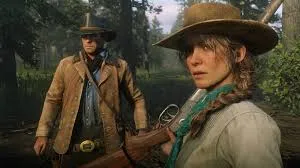
Arthur, meanwhile, begins to see both sides. His sense of loyalty is strong, but he also feels the weight of Dutch’s decisions. The camp itself feels “temporary,” not because it is meant to move, but because it no longer feels like home. Horseshoe Overlook is the moment players realize the gang is living on borrowed time.
4. Clemens Point: Cracks in Community
At Clemens Point, the gang begins to fracture along emotional and ideological lines.
Conflicts brew quietly:
- Micah whispers poison into Dutch’s ear
- Strauss pushes families into debt and despair
- Molly spirals into loneliness
- The children of the gang grow restless and scared
Dutch now speaks in abstractions instead of plans. He claims the world is against them — a self-fulfilling prophecy, because the gang no longer operates with unity.
Clemens Point represents the first signs of emotional decay. The tension is no longer external — it is internal.
H3: The Rise of Micah
Micah Bell is not just a villain; he is the embodiment of everything Dutch is becoming.
Micah offers solutions through violence, chaos, and ruthlessness.
Where Hosea advises caution, Micah encourages action.
Dutch, desperate to maintain authority, gravitates toward this reckless confidence.
Their alliance begins in Clemens Point — and marks the beginning of the gang’s moral corruption.
5. Rhodes and Saint Denis: The Myth of Civilization
The gang’s operations in Rhodes and Saint Denis expose a crucial theme: the romanticized “freedom” of the frontier was always an illusion. Civilization isn’t the enemy — corruption is.
In Rhodes, the gang becomes pawns in a feud between the Braithwaites and the Grays, two families whose wealth masks decay. Dutch claims the gang is superior to society, but their manipulation proves otherwise.
In Saint Denis, the gang faces true modernity: electric lights, political machinery, industrialization, class hierarchy. Dutch is overwhelmed by this world. He cannot charm it, cannot outgun it, and cannot philosophize his way through it.
H4: The Failed Bank Job in Saint Denis
The robbery is a tragic echo of Blackwater.
This time, the consequences are worse:
- Hosea dies
- Lenny dies
- Dutch’s mask of control shatters
Everything the gang was collapses in a single night. The tragedy is not the loss of money — it is the loss of the heart that kept Dutch grounded.
6. Guarma: A Paradise That Reveals the Truth
Guarma is more than a narrative detour; it is a metaphorical journey into the heart of Dutch’s madness.
Here, freed from obligations and camp politics, Dutch still spirals. He becomes paranoid, violent, obsessed with revenge. He cannot blame civilization because the island is outside civilization.
This is where Arthur sees Dutch without excuses.
H3: Dutch’s Moral Unraveling
During the Guarma uprising, Dutch stops fighting for freedom and starts fighting for ego. He calls his actions “just,” but they increasingly serve only his pride.
When he lets an ally die to protect himself, Arthur understands the truth:
Dutch’s philosophy was never about freedom.
It was about control.
Guarma strips Dutch of myth and reveals the man beneath — fragile, frightened, and desperate for power.
7. Beaver Hollow: The Camp of Ghosts
Beaver Hollow is the gang’s graveyard.
The laughter is gone, the warmth is gone, the trust is gone. The once-lively campfire is replaced by cold darkness and whispered threats.
Micah’s influence peaks here. Dutch becomes tyrannical, demanding unquestioning obedience. Members vanish mysteriously. Strauss continues exploiting the weak. Sadie grows more violent, Charles more weary, John more rebellious.
Arthur, now ill with tuberculosis, sees everything clearly. His illness becomes symbolic: the gang’s decay is now inside him as well. His personal journey shifts from survival to redemption.
H4: The Death of Faith
Arthur no longer believes in Dutch — but he still loves the people of the gang.
His conflict is emotional, not ideological.
He realizes that salvation does not lie in Dutch’s vision but in protecting those who can still be saved.
8. Arthur’s Awakening: The Search for Redemption
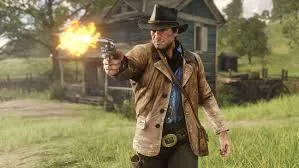
Arthur Morgan’s arc is one of the greatest character journeys in gaming.
His life begins as unquestioning loyalty: Dutch’s word is law. But through loss, illness, and reflection, Arthur evolves from a follower into a moral agent.
His illness forces him to confront mortality. His journal entries grow philosophical, introspective, almost poetic. He begins questioning not only Dutch but himself.
H3: His Relationship with John
Saving John is not simply friendship — it is Arthur’s attempt to break a cycle.
Arthur sees in John the chance to protect a better future, one the gang could never achieve.
Helping John escape is Arthur’s ultimate act of rebellion against Dutch’s toxicity.
It is also his act of love.
9. The Final Collapse: Loyalty Shattered
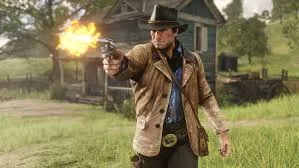
The final confrontation on the mountain is not a battle between outlaws — it is a battle between ideologies.
Dutch stands between Arthur and Micah, the two forces that define his past and his future.
The tragedy is not that Dutch chooses wrong, but that he cannot choose at all.
His indecision is the final proof of his collapse.
Arthur’s death — whether peaceful or vengeful — represents the symbolic death of the gang’s soul.
After that, the survivors scatter:
- John seeks family
- Sadie seeks vengeance
- Charles seeks peace
- Dutch seeks meaning he will never find
The gang is gone, but their emotional echoes remain.
10. Epilogue and Aftermath: America Moves On
John Marston’s epilogue is bittersweet.
He builds a ranch, tries to raise his son, and attempts to live the life Arthur wished for him. But the world does not forgive outlaws.
America industrializes, expands, transforms.
The myth of the old West dies.
The Bureau of Investigation, railroads, factories, law enforcement — all symbols of the modern age — relentlessly hunt the last remnants of the gang.
John’s death in Red Dead Redemption 1 becomes the final punctuation mark on the Van der Linde tragedy.