.webp)







Once Human entered the crowded survival-sandbox market with an unusual ambition: to merge open-world crafting, cosmic horror, and MMO-style progression into a single, evolving ecosystem. With its vibrant surreal landscapes, biomass-driven mutations, and seamless co-op systems, the game drew immediate attention. But early criticism highlighted thin late-game content, repetitive combat loops, and a world that felt visually bold yet mechanically underdeveloped.
The 2025 update cycle changed everything.
This feature explores how Once Human has evolved into a more immersive, rewarding, and narratively coherent experience. With expanded world zones, new anomaly-driven systems, and refined faction arcs, the 2025 version finally aligns the game’s chaotic science-fantasy vision with meaningful mechanics and long-term engagement.

The World Reforged: New Zones, Dynamic Surges, and Environmental Cohesion
Expanding the Map Beyond Familiar Ruins
The 2025 expansion introduced two major regions:
- The Cradle Expanse, a bio-distorted savanna with pulsating crystalline ridges
- The Gutterline Valleys, a canyon labyrinth influenced by a constant creeping biomass fog
These regions serve as late-midgame progression hubs, balancing high risk with high reward. Each biome features new Strange Creatures, mutated fauna patterns, and environmental hazards that require specific gear tuning.
World Surges and Shifting Topology
One of the most transformative innovations is the Surge System.
Surges are large-scale distortions—temporal glitches, biomass storms, reality fractures—that temporarily alter:
- Traversal routes
- Enemy spawn types
- Resource concentration
- Player debuffs or environmental attrition
Surges fundamentally change how the world feels. Instead of predictable resource runs, players must react dynamically: a route once safe becomes a deathtrap, or a dead zone becomes an opportunity with rare Strange Matter nodes.
Anomaly Ecology and Living Landscapes
Environmental storytelling now expresses itself through Anomaly Behavior Layers:
- Biomass tendrils spreading between towns
- Factions fighting over anomaly cores
- New wildlife migration events
- Transforming terrain influenced by player actions
The world of Once Human feels responsive, volatile, and narratively alive.
Combat Overhaul: Momentum, Mutation, and Tactical Synergy
A More Fluid Core Loop
The 2025 patch cycle refined:
- Hit detection consistency
- Recoil patterns
- Stamina economy
- Close-range stagger rules
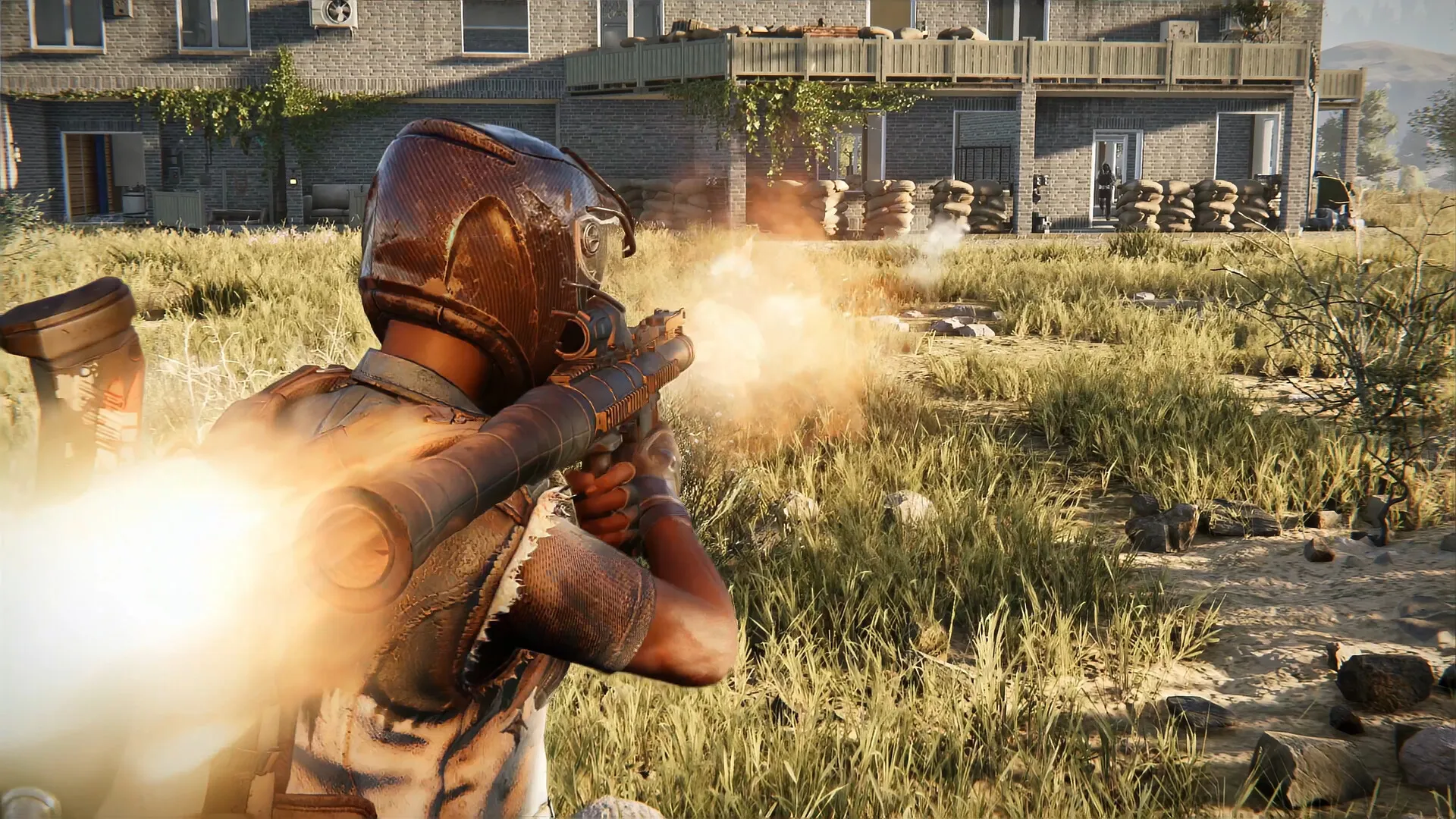
The previous stiffness is replaced by a fluid system where weapon identity is sharper. Shotguns feel devastating in biomass nests, SMGs anchor mid-range clearing, and heavy rifles carry the weight needed against armored aberrations.
Mutation Integration
The Mutation System—always a thematic hook—finally received depth matching its aesthetic promise.
Players unlock:
- Body grafts offering conditional enhancements
- Tactical mutations that activate during Surges
- Evolution tiers that specialize in mobility, resilience, or damage
Mutations feel less like gimmicks and more like a progression path that intersects with combat rhythm and survival strategy.
Team Synergy and Late-Game Coordination
Once Human increasingly leans into MMO-style combat encounters. The updated system encourages teams to adopt informal roles:
- Breakers using heavy weapons or mutations to stagger boss cores
- Harvesters extracting anomaly energy mid-fight
- Control specialists containing elite mobs
- Surge runners who flank during environmental distortions
These synergies are not hard-coded roles but organic play patterns that develop in coordinated groups.
Faction Expansion: Deeper Lore, Stronger Motivations
The Dustdwellers Rewritten
Originally a simple rebel faction, the Dustdwellers now have layered ideology rooted in survivalist pragmatism. Their new story arc explores:
- Conflicts over controlling anomaly wells
- Their belief that human biology must adapt, not resist
- Tensions with Inheritors who reject mutation
The improved writing gives players morally ambiguous choices rather than clear allies and enemies.
The Inheritors as Ideological Extremists
The Inheritors campaign received a thematic enhancement. No longer a generic techno-cult, they now frame themselves as protectors of “pure humanity.” Their arc involves:
- Purification technology missions
- Bio-lab sabotage events
- Moral confrontations about autonomy and experimentation
The faction now stands as a philosophical opposite to the mutation-embracing Dustdwellers, creating a clear narrative tension.
The Hollow Choir and the New Apex Threat
The enigmatic Hollow Choir received the largest update.
Their origins, tied to cosmic resonance and interdimensional frequencies, unfold through:
- New dungeons
- Whisper events during Surges
- Bosses that phase into alternate fragments of reality
This faction becomes the late-game lynchpin, tying together the world’s cosmic horror themes.
Base Building and Territory Control Improvements
Structured Progression Without Losing Freedom
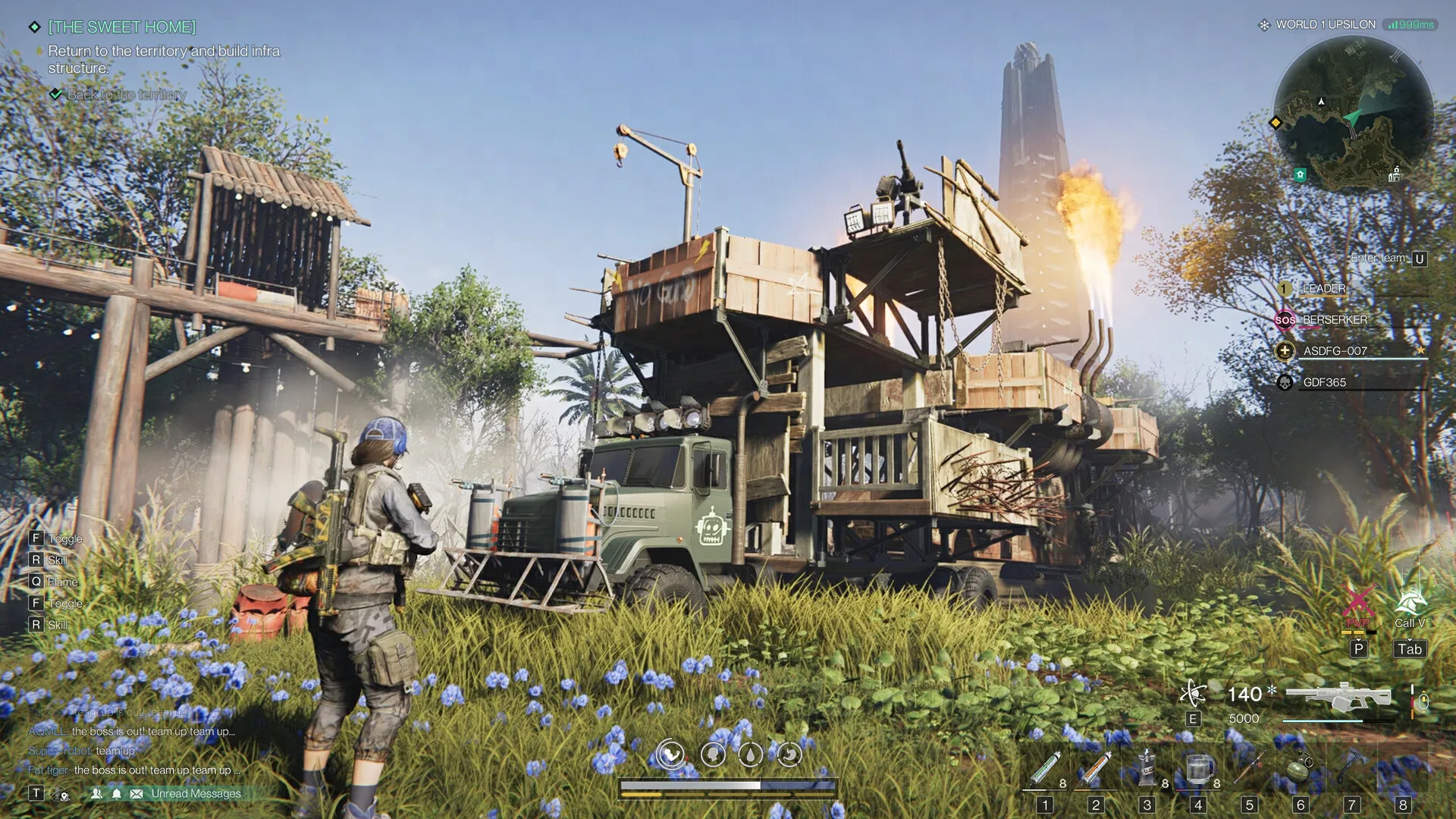
Base building now feels more strategic thanks to the 2025 additions:
- Territory influence points
- Biomass-resistant building materials
- Modular defense automation
Instead of piling random structures, players build purposefully with long-term goals.
Community Zones and Shared Engineering
A major addition is Shared Hubs, buildable in predetermined safe sectors where multiple players can:
- Construct communal facilities
- Trade resources
- Establish defensive grids
- Launch faction assaults
These hubs reshape the social structure of the game.
Raids, Sieges, and Territorial Surges
Faction-aligned raids now involve:
- Siege breaches in environmental waves
- Defense nodes players must protect
- Surge-altered boss variants
Base defense is no longer passive—it's a dynamic event integrated into world systems.
Progression, Crafting, and the Pursuit of Late-Game Depth
Streamlined Early-Game, Deepened Endgame
Crafting complexity used to overwhelm newcomers. The 2025 update simplified early systems while expanding late-game depth:
- Early recipes use unified materials
- Mid-tier crafting introduces anomaly-reactive components
- High-tier crafting uses Stellar Biomass, gained through Surge bosses
The result is smoother onboarding and richer late-game pursuits.
Weapons That Grow With You
The new Ascendant Weapon Path allows players to:
- Level a favorite gun
- Embed evolving anomaly traits
- Unlock mutation-linked perks
- Re-roll stats using rare Surge Drops
Customization depth supports long-term character identity.
Cosmic Crafting: A New Layer of Unpredictability
Cosmic crafting introduces components with unpredictable properties. These traits can:
- Distort bullet trajectory into wave patterns
- Split projectiles
- Apply anomaly pressure
- Weakly warp gravity around the impact site
This system adds controlled chaos—perfect for a cosmic-horror survival world.
Event Architecture and Seasonal Narrative Structure
The Year 2025 Season Model
Once Human now rotates through multi-phase seasons that add:
- New enemies
- Time-limited anomaly mutations
- Seasonal storylines
- Unique expedition zones
Each season culminates in a Surge Apex Event with rare rewards.
Narrative Cohesion Through Seasonal Fragments
Seasonal storytelling now uses:
- Region-changing events
- Faction realignments
- Player-vote decisions that alter global conditions
This approach gives the player community meaningful influence over the evolving world.
Major World Events: Apex Anomalies
The biggest addition is Apex Anomalies, massive world events that distort multiple regions at once. These introduce:
- Bosses with multi-phase environmental mechanics
- Temporary rewrites of local physics
- Limited-time harvesting windows
- Mutated creatures that roam outside typical spawn zones
Participation amps up the game’s sense of global survival.
Atmosphere, Visual Identity, and Audio Evolutions
Visual Upgrades
The 2025 update refined:
- Biomass shader quality
- Particle bloom behavior
- Skybox transitions during Surges
- Character illumination in high-spore zones
These visual changes make the world more cohesive and eerie.
Evolved Sound Design
Sound cues now better communicate gameplay effects:
- Surge buildup hum
- Anomaly pressure pulses
- Mutation synergy activations
- Faction assault alarms
Audio no longer just decorates the experience—it guides it.
The Mood of Cosmic Survival
Once Human’s world is stranger, darker, and more dreamlike than before, embracing its identity as a surreal survival MMO.
Why the 2025 Version Works
1. The Systems Finally Connect
Previously disconnected features now integrate into an organic whole:
- Mutations link to combat
- Combat influences Surges
- Surges influence crafting
- Crafting affects exploration
- Exploration ties directly into faction arcs
The game feels holistic, not modular.
2. The World Moves With or Without You
Dynamic Surges, migrations, and faction conflicts give players a world that truly evolves.
3. Player Identity Matters
With weapon ascension, mutation paths, and faction alignment, players build a long-term identity rather than a disposable survivor.
Conclusion
Once Human in 2025 stands as a fully realized survival sandbox: atmospheric, unpredictable, creatively ambitious, and narratively coherent. Through revised world systems, faction arcs, mutation integration, and late-game content, it finally becomes what it promised at launch—a cosmic-horror MMO where players chart their own path through an ever-changing post-apocalyptic frontier.