
How to Play Moon Sweepers and Build a Successful Lunar Cleaning Operation

Moon Sweepers is a cooperative cleaning and automation simulation game that turns an unusual task into an entertaining adventure. Instead of exploring the Moon to discover alien civilizations or fight dangerous enemies, players are given one major responsibility, cleaning the lunar surface. What makes the experience interesting is that the job begins with extremely basic equipment and gradually develops into a much larger operation involving improved cleaning tools, resource transportation, machinery, vehicles, and teamwork.
Developed by DragDrop Games, Moon Sweepers was released on October 23, 2026, for Windows through Steam. Players can enjoy the experience alone or cooperate with up to 16 people in an online multiplayer session. The main objective is to collect lunar dust, transport it to a depot, sell the collected resources, and reinvest the earnings into better equipment. As the operation expands, players can introduce automation systems and cleaning vehicles to improve productivity.
Steam Store+1
Learning how to play Moon Sweepers is relatively straightforward, but building an efficient cleaning operation requires planning and smart decisions. Beginners should understand the basic resource cycle before investing in expensive equipment or attempting complicated automation systems. This guide explains how to get started, collect lunar dust, manage resources, purchase upgrades, explore the environment, use machinery, and cooperate with other players. By following these steps, you can gradually transform a small cleaning assignment into an organized lunar industry.
1. Understand the Main Objective and Gameplay Mechanics
Before beginning your first cleaning operation, take some time to understand what Moon Sweepers expects you to accomplish. The central objective is to remove dust from the lunar surface while developing a sustainable system that allows you to work more efficiently. The Moon contains large areas that need attention, so completing the entire assignment is a long term project rather than something that can be finished in a single session. Every cleaning action contributes to your overall progress.
The gameplay revolves around a repeating economic cycle. You collect dust using your available equipment, store the material, transport it to a depot, and prepare shipments to receive money. That money becomes the foundation for future development. You can purchase better cleaning equipment, increase your carrying capacity, and eventually introduce machines that reduce the amount of manual work required. Understanding this relationship between cleaning, transportation, and investment is essential because each stage supports the next one.
Important gameplay elements to understand
- Cleaning equipment determines how efficiently you collect lunar dust.
- Storage capacity determines how much material you can carry before returning to a depot.
- Depots provide a place to handle collected resources and prepare shipments.
- Earnings allow you to purchase equipment and expand your operation.
- Automation systems reduce repetitive manual activities.
- Vehicles help you cover larger distances and transport resources.
- Multiplayer cooperation allows several players to contribute to the same project.
A useful beginner strategy is to concentrate on understanding the complete resource cycle instead of trying to purchase every available item immediately. When you know how much time each activity requires, you can identify which part of your operation needs improvement. This approach prevents unnecessary spending and helps you develop a more balanced cleaning system.
2. Start Your First Cleaning Session
Your first assignment begins with limited equipment, including a basic toothbrush. Although this tool is not particularly powerful, it provides everything you need to understand the fundamental cleaning mechanics. Before heading outside the station, check your equipment and become familiar with the available interaction prompts. Make sure you know how to equip the tool, move around the environment, and monitor your collected dust.
Once you are ready, move toward a nearby dusty section of the lunar surface. Begin sweeping small areas and observe how the ground changes as you work. The visible difference between dusty and cleaned terrain helps you understand where your efforts are having an effect. Rather than wandering across the Moon without a plan, concentrate on one manageable area and gradually expand your cleaning route.
How to complete your first cleaning task
- Visit the equipment supply area and collect your starting toothbrush.
- Equip the tool using the available inventory controls.
- Move outside the station and locate a dusty surface.
- Sweep the ground until your storage begins collecting lunar dust.
- Monitor your capacity so you know when it is time to return.
- Follow the station prompts to complete the delivery process.
During this first session, focus on accuracy and consistency instead of speed. Your initial tool may require several passes to clean a small area, but this is part of the early progression system. Pay attention to the distance between your cleaning location and the station because unnecessary travel can make an already slow process even less efficient.
You should also become familiar with the surrounding environment. Identify nearby stations, useful landmarks, and possible routes for future cleaning sessions. A good starting location makes it easier to repeat the same process while earning enough money for your first equipment improvements.
3. Collect, Store, and Deliver Lunar Dust
Collecting lunar dust is only the beginning of the resource management process. Once your equipment gathers material, you need to manage the available storage space and decide when to return to a depot. Carrying capacity is important because it determines how much dust you can collect during one trip. If your storage fills quickly, you may spend more time traveling back and forth instead of cleaning new areas.
For beginners, the best strategy is to establish a short and reliable delivery route. Work in an area close to your station, collect enough dust to fill a useful load, and return before wasting time searching for additional material that cannot fit in your storage. After reaching the depot, follow the interaction prompts to transfer your collected resources and prepare a shipment. Check the depot display to confirm that the material has been accepted and monitor your balance after completing the selling process.
How to improve your delivery routine
- Choose a cleaning location close to your depot during the early game.
- Watch your storage indicator while collecting dust.
- Return when your carrying capacity is nearly full.
- Confirm that the depot has accepted your collected material.
- Check your earnings before purchasing additional equipment.
- Avoid making unnecessary trips between distant locations.
An efficient delivery routine should balance cleaning time and transportation time. Collecting a large amount of dust is useful, but it does not help much if you spend most of your session walking back to the station. Similarly, returning too frequently can interrupt your progress and reduce the amount of ground you clean.
As your equipment improves, experiment with longer routes and larger loads. You should gradually reach a point where each delivery produces enough income to support meaningful upgrades. Keep track of how much material you collect during each trip and compare the time required to complete different routes. This simple habit will help you identify the most productive areas of your operation.
4. Earn Money and Choose the Right Upgrades
Money is one of the most important resources in Moon Sweepers because nearly every major improvement depends on your ability to generate income. Your first earnings may seem small, but they provide the starting capital needed to improve your cleaning equipment. Instead of spending everything as soon as you receive a payment, examine the available upgrades and consider which purchase will solve your biggest problem.
There are several reasons why an operation might progress slowly. Your cleaning tool may cover too little ground, your storage may fill too quickly, or your depot may be too far away. Each problem requires a different solution. Purchasing a more powerful brush can improve manual cleaning, while increasing carrying capacity can reduce the number of delivery trips. A better route or additional infrastructure may be more valuable when transportation becomes the main limitation.
How to prioritize your purchases
- Identify the activity that consumes the most time.
- Check whether an available upgrade improves that activity.
- Compare the purchase price with your current savings.
- Consider how the upgrade will affect the entire cleaning cycle.
- Purchase one improvement and test its effectiveness.
- Save additional money for the next important development.
Do not assume that the most expensive equipment is automatically the best purchase. An upgrade should provide a noticeable improvement to your current operation. For example, a larger storage capacity may be more useful than a stronger cleaning tool if you already collect dust quickly but constantly need to return to the depot.
It is also important to avoid purchasing several unrelated items without understanding their purpose. Every purchase should contribute to a clear development goal. Once you establish a reliable income, you can begin saving for larger machines and vehicles that introduce new ways to complete the assignment.
5. Expand Your Cleaning Area and Explore the Moon
After improving your starting equipment and establishing a reliable delivery routine, you can begin exploring larger sections of the lunar surface. Expanding your cleaning area is an important part of progression because it allows you to discover new routes, identify useful locations, and make better use of improved equipment. However, moving too far away from your depot without preparing a return route can create unnecessary difficulties.
Use the map to understand the layout of the environment and identify areas that still need cleaning. Pay attention to nearby stations, partially completed sections, and available navigation points. The map provides a useful overview of your progress and helps you decide where to work next. Try to finish one connected section before moving to another distant location. This makes it easier to measure your progress and avoid leaving numerous unfinished areas behind.
Tips for exploring efficiently
- Start with locations that are relatively close to your current base.
- Select areas with enough dusty ground to justify the journey.
- Use the map to monitor local and overall cleaning progress.
- Keep track of your route between cleaning locations and stations.
- Avoid traveling long distances without checking your equipment.
- Use discovered stations and available navigation features when appropriate.
As you become more familiar with the Moon, you can also investigate landmarks and optional activities. Flags, surveys, and other exploration objectives can provide additional rewards according to their available interactions. These activities give you another reason to explore beyond the immediate cleaning area.
Remember that completing a local section and completing the entire lunar assignment are different milestones. A region may appear clean while the overall map still shows considerable unfinished work. Check the map regularly so you understand the difference between local achievements and your total progress. This will help you create realistic goals for each session instead of trying to clean too much territory at once.
6. Upgrade Your Tools and Unlock Better Cleaning Equipment
The starting toothbrush is useful for learning the basic mechanics, but it is not designed to handle large cleaning operations efficiently. As your earnings increase, you should gradually replace basic equipment with tools that cover more ground and collect dust more effectively. Better equipment reduces repetitive work and allows you to complete larger cleaning assignments without spending as much time on individual sections.
When choosing a new tool, consider more than its appearance or purchase price. Think about how much ground it can cover, how frequently you need to empty your storage, and whether it makes your current cleaning route easier to manage. A stronger cleaning tool can increase the amount of material collected during a session, but its benefits become more noticeable when your storage and delivery arrangements can support the additional workload.
A practical equipment development strategy
- Begin with the free toothbrush and learn how manual cleaning works.
- Save enough money to purchase a more useful early cleaning tool.
- Improve storage capacity when frequent deliveries interrupt your work.
- Continue upgrading equipment as your cleaning area expands.
- Consider larger cleaning machines when manual work becomes inefficient.
- Keep your transportation system capable of handling increased production.
As you progress, cleaning vehicles become an important part of your operation. These machines can help you cover larger areas and reduce the physical effort involved in clearing the lunar surface. Before investing in a vehicle, consider where you intend to use it and how you will transport the collected material back to a suitable location.
It is also useful to compare equipment according to your actual working conditions. A tool that performs well in a small area might not be ideal for a large cleaning route. Likewise, equipment with greater capacity may be less valuable if you spend too much time traveling between locations. The best upgrade is the one that improves the entire process rather than only one isolated activity.
7. Build an Automation System for Continuous Progress
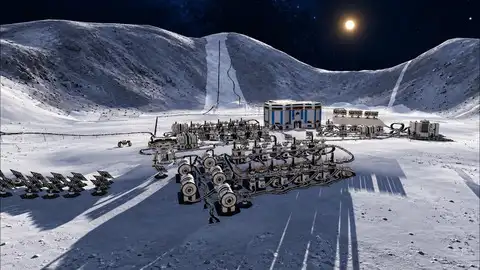
Automation is one of the most important development stages in Moon Sweepers. Once you understand manual cleaning and resource transportation, you can begin constructing systems that perform repetitive activities with less direct involvement. This changes the way you approach the game because you are no longer responsible for completing every part of the cleaning process yourself. Instead, you become responsible for designing and maintaining an efficient production network.
Start with a small automation project rather than building a complicated factory immediately. Conveyors, packagers, mergers, splitters, and other machines can help transport and process collected materials. However, each machine needs to be connected correctly to the next stage. A single disconnected belt or blocked output can interrupt the entire system. Build a short route, test it, and confirm that the collected material reaches the intended destination before expanding your design.
How to create your first automation route
- Select a suitable collection location.
- Place the required equipment near the collection area.
- Connect the collector to a packager or appropriate transport system.
- Build a conveyor route toward the depot intake.
- Check that every connection is working correctly.
- Test the system with a small amount of material.
- Expand the route only after confirming successful delivery.
Once the basic transportation system works, you can experiment with more advanced production chains. Different machines may handle different materials, so you should understand their inputs and outputs before connecting them. A processing system can become inefficient when one machine produces materials faster than the next machine can accept them.
Understanding automated production
An effective automated operation should have a clear beginning, middle, and end. The collection stage gathers resources, transportation moves them through the system, processing equipment handles the required materials, and the final stage sends the output toward storage or the depot. This structure makes it easier to identify problems when production stops.
You should also monitor the system after leaving the immediate area. Some automation features are designed to continue operating without constant player attention, but you still need to check their status and make sure their connections remain functional. Patch 1.0.4 introduced important improvements to J.O.O.N.A.S. and its unattended cleaning behavior, making automation more useful for larger operations.
8. Use Cleaning Robots, Vehicles, and Transportation Systems
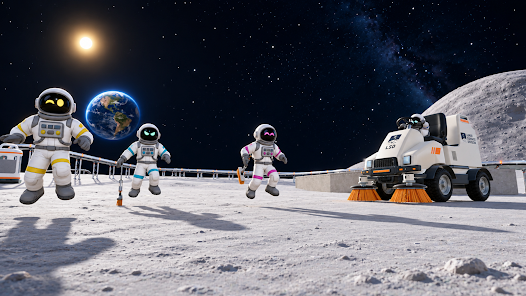
As your operation grows, you will eventually need more than basic cleaning tools and conveyor belts. Cleaning robots and vehicles provide additional ways to manage large areas while reducing the amount of manual work required. These systems are particularly useful when you want to expand beyond the immediate surroundings of your starting station.
J.O.O.N.A.S. is an important automation feature that helps handle cleaning activities across assigned areas. Rather than manually sweeping every section, you can use the robot system to support your operation. Its effectiveness depends on the available setup, reachable terrain, collection arrangements, and the condition of its delivery connections. Make sure the robot can access the areas you want it to clean and that collected material has a suitable route toward your depot.
How to manage cleaning robots effectively
- Examine the robot and its available activity information.
- Choose a suitable cleaning area.
- Check that the robot can reach the assigned terrain.
- Connect the required collection and delivery equipment.
- Monitor its storage or catcher status.
- Inspect the conveyor route if collected material stops moving.
- Review the map to evaluate cleaning progress.
Vehicles provide another useful improvement because they make traveling across larger sections of the Moon more practical. However, purchasing a vehicle does not automatically guarantee a more productive operation. You still need to consider the distance between your cleaning area, available stations, and unloading points. A fast vehicle can save travel time, but an inefficient delivery route can still reduce your overall productivity.
Try to create a transportation plan before moving your entire operation to a distant location. Identify a convenient depot, establish a route that avoids unnecessary detours, and make sure your equipment can handle the amount of material you intend to collect. Combining vehicles with automation can create a more efficient system than relying on either method independently.
9. Play With Friends and Organize a Cooperative Team
Moon Sweepers supports online cooperative sessions with up to 16 players. Multiplayer is a major advantage because several people can contribute to the same lunar cleaning project. Instead of completing every task alone, you can divide responsibilities and work toward a shared objective. A coordinated group can cover more ground, organize deliveries, and develop its equipment much faster than a disorganized team.
Before starting a cooperative session, discuss what each player should do. If everyone focuses on the same small area, other important tasks may remain unfinished. One player can concentrate on manual cleaning, another can manage resource transportation, while others can explore new sections or maintain the automation system. These responsibilities can change as the operation develops.
Suggested team responsibilities
- Cleaning specialists focus on clearing assigned sections.
- Transport workers move collected resources toward the depot.
- Equipment managers monitor machines and improve production routes.
- Explorers discover useful locations and plan future cleaning areas.
- Coordinators monitor overall progress and organize team priorities.
Communication is especially important when several players share the same resources and equipment upgrades. According to the game's update information, upgrades became shared across the crew in patch 1.0.3. This means purchasing decisions should be discussed before spending money, because an upgrade can affect the entire group rather than only the player who buys it.
moonsweepers.com+1
Another useful strategy is to divide the lunar surface into manageable working zones. Each player or small group can concentrate on a particular area while keeping the transportation network organized. This reduces unnecessary movement and makes it easier to see which sections still need attention.
Avoid making cooperative sessions unnecessarily complicated. New players should first learn the basic cleaning and delivery mechanics before taking responsibility for advanced machinery. Experienced players can help by explaining equipment connections, demonstrating efficient routes, and showing how to identify common production problems. With clear communication and sensible responsibilities, multiplayer becomes a much more productive experience.
10. Avoid Common Mistakes and Develop a Long Term Strategy
Even though Moon Sweepers has relatively simple basic mechanics, players can make several mistakes that slow down their progress. One common problem is spending too much money on equipment without considering whether it solves an actual issue. Another is expanding into distant areas before establishing a reliable delivery route. Both decisions can create an operation that looks impressive but performs poorly.
Automation can also become difficult to manage when players build too many machines at once. If the system stops working, identifying the cause becomes harder because there are several possible points of failure. Instead of immediately replacing equipment, inspect the production line step by step. Check the collector, storage, packager, conveyor connections, processing machines, and depot intake. Find the first stage where the material stops moving and focus on fixing that problem.
Common mistakes to avoid
- Spending all your earnings on unnecessary equipment.
- Ignoring storage capacity while improving cleaning speed.
- Cleaning distant locations without planning transportation.
- Building complicated automation systems before testing simple routes.
- Forgetting to check whether robots can access assigned terrain.
- Ignoring blocked conveyors and full collection containers.
- Allowing several players to perform the same task unnecessarily.
- Focusing on local progress while ignoring the overall map.
A long term strategy should focus on improving one part of the operation at a time. Begin with manual cleaning, establish a reliable income, upgrade essential equipment, and then introduce automation. Once your resource network is stable, expand into larger areas and incorporate cleaning vehicles. This gradual approach makes each improvement easier to understand and reduces the risk of wasting resources.
You should also pay attention to game updates. Moon Sweepers is a recently released game, and its mechanics may change as the developers introduce improvements or balance adjustments. For example, patches 1.0.3 and 1.0.4 changed several aspects of multiplayer upgrades, automation, robot behavior, and navigation. Checking the current version and reading the latest update information can help you avoid following outdated instructions.
moonsweepers.com+1
Finally, remember that cleaning the entire Moon is an enormous objective. Do not measure success only by how quickly you can finish the assignment. Enjoy improving your equipment, discovering new locations, experimenting with automation, and working with other players. Setting smaller goals for each session makes the experience more manageable and gives you a clear reason to continue developing your operation.
Conclusion
Moon Sweepers offers a creative combination of cleaning simulation, resource management, exploration, automation, and cooperative gameplay. What begins as a simple assignment with a toothbrush gradually becomes a much larger operation involving advanced tools, transportation systems, cleaning robots, and organized production networks. Understanding the relationship between collecting dust, delivering resources, earning money, and purchasing upgrades is the key to making consistent progress.
For beginners, the most effective approach is to master manual cleaning before investing in complicated machinery. Establish a reliable delivery route, improve your storage capacity, and purchase equipment that addresses your biggest limitations. As your earnings increase, experiment with automation and vehicles to reduce repetitive work. If you play with friends, organize responsibilities and communicate before making important purchases.
Most importantly, take your time and enjoy the progression. Whether you prefer working independently, exploring the lunar surface, designing automated systems, or cooperating with a large team, Moon Sweepers provides plenty of opportunities to develop your own cleaning strategy. With careful planning and consistent improvements, you can turn a small lunar cleaning assignment into a highly productive operation.