.webp)






RACCOIN: Coin Pusher Roguelike combines two genres that rarely intersect: the classic coin pusher arcade machine and the roguelike progression system. Players drop coins onto a moving platform filled with treasures, hoping to push rewards over the edge. Unlike traditional coin pusher games, RACCOIN introduces procedural upgrades, relic systems, and escalating stages that resemble roguelike design.
At first glance, the concept feels simple. Players drop coins strategically, unlock upgrades, and attempt to build a powerful run before their resources run out. However, beneath this seemingly straightforward gameplay lies a deeper design tension: the balance between player strategy and randomness.
Coin pusher mechanics naturally rely on physics randomness. Coins bounce, stack unpredictably, and fall based on momentum and friction. Roguelike design, on the other hand, depends on meaningful player decisions—choosing upgrades, managing risk, and optimizing builds.
In RACCOIN, these two systems occasionally clash. When randomness dominates the outcome, strategic planning can feel meaningless. When upgrades become too powerful, the randomness disappears entirely. The game’s long-term depth therefore hinges on maintaining a delicate balance between luck-driven physics and deliberate player strategy.
This article explores the structural issue of risk versus randomness in RACCOIN: Coin Pusher Roguelike, examining how this tension emerges during different phases of a run and how it shapes the player experience.
1. The Core Coin Pusher Mechanic
The foundation of RACCOIN is the coin pusher system familiar from arcade machines.
Players drop coins onto a platform that moves forward and backward, gradually pushing existing coins toward the edge.
H3: Basic Gameplay Loop
The core gameplay cycle includes:
- Dropping coins strategically
- Triggering chain reactions
- Collecting coins that fall off the platform
H4: Physics-Based Uncertainty
Coins do not behave perfectly predictably. They may:
- Slide between gaps
- Stack on top of other coins
- Bounce away from valuable targets
This unpredictability introduces the first layer of randomness.
2. The Roguelike Upgrade System
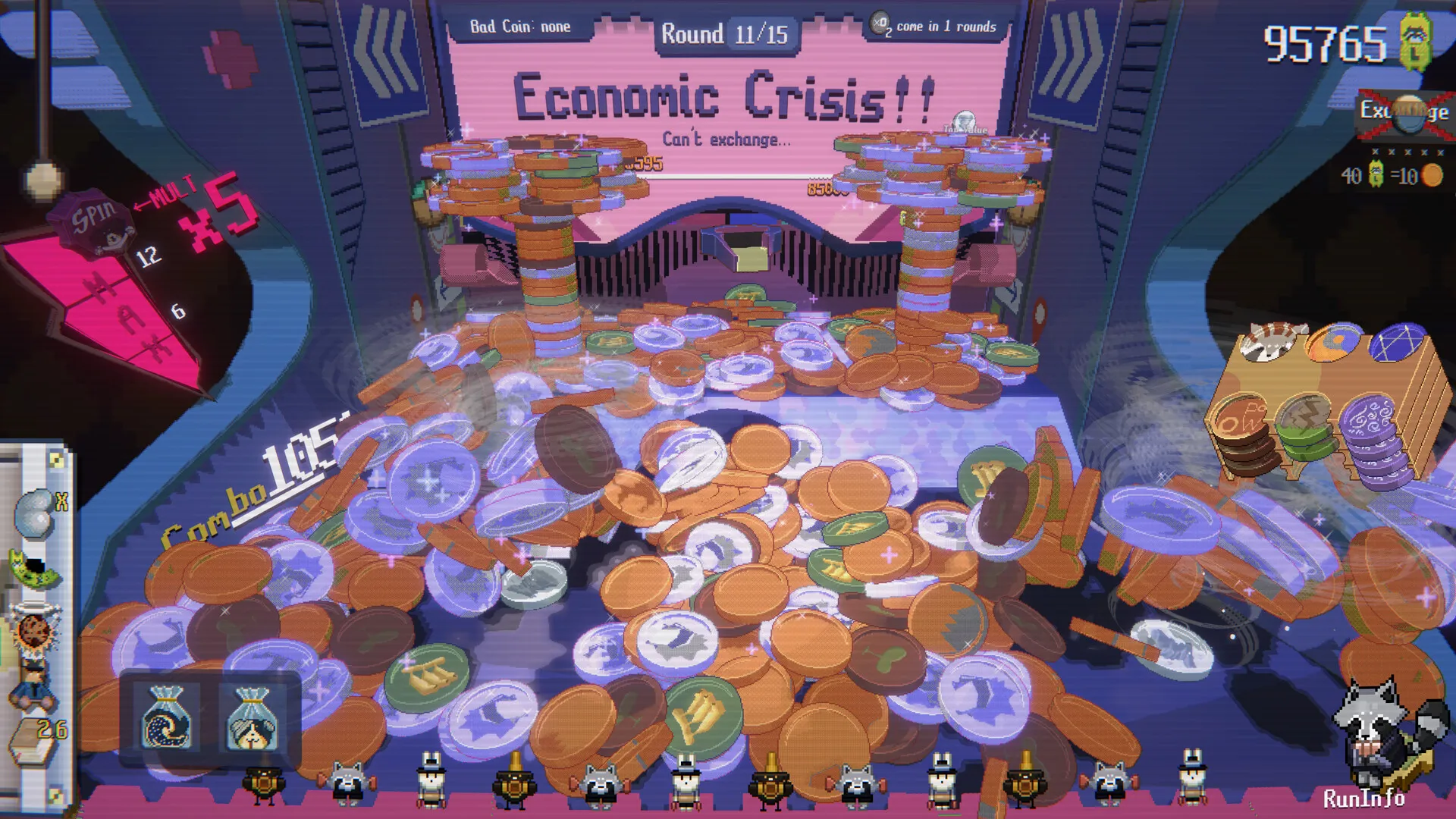
To deepen gameplay, RACCOIN adds a roguelike progression layer where players unlock upgrades during a run.
H3: Upgrade Categories
Common upgrade types include:
- Coin multipliers
- Platform effects
- Special drop coins
- Chain reaction triggers
H4: Strategic Build Planning
Players must choose upgrades that synergize with their current playstyle.
For example, a build focused on coin multiplication may prioritize upgrades that increase drop frequency.
This system introduces strategic decision-making.
3. The Early Game: Luck Dominates
At the start of a run, players have limited coins and almost no upgrades.
H3: Limited Control
Because the platform begins relatively empty, early drops often produce unpredictable results.
Coins may fall harmlessly into gaps without pushing anything meaningful.
H4: Psychological Impact
Players feel heavily dependent on luck during this stage.
Successful runs often begin with early fortunate pushes that generate extra resources.
4. Mid-Game: Strategy Begins to Matter
As players collect upgrades, the balance between randomness and control begins to shift.
H3: Emerging Synergies
Certain upgrade combinations dramatically improve consistency.
Examples include:
- Coin duplication effects
- Automatic push triggers
- Increased coin weight
H4: Tactical Placement
Players begin targeting specific areas of the platform where coin clusters form.
Strategic coin placement becomes increasingly viable.
5. The Platform Congestion Problem
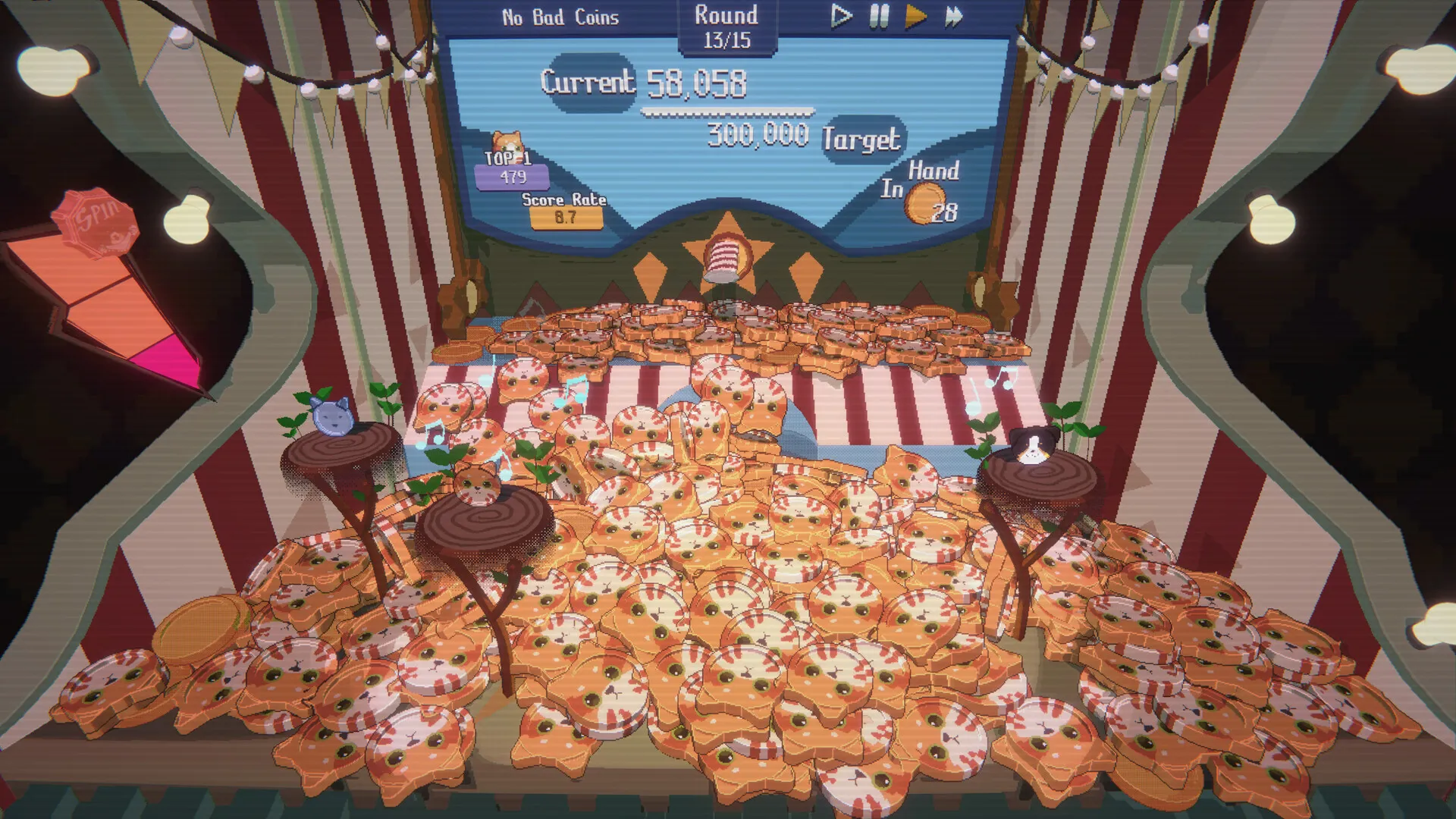
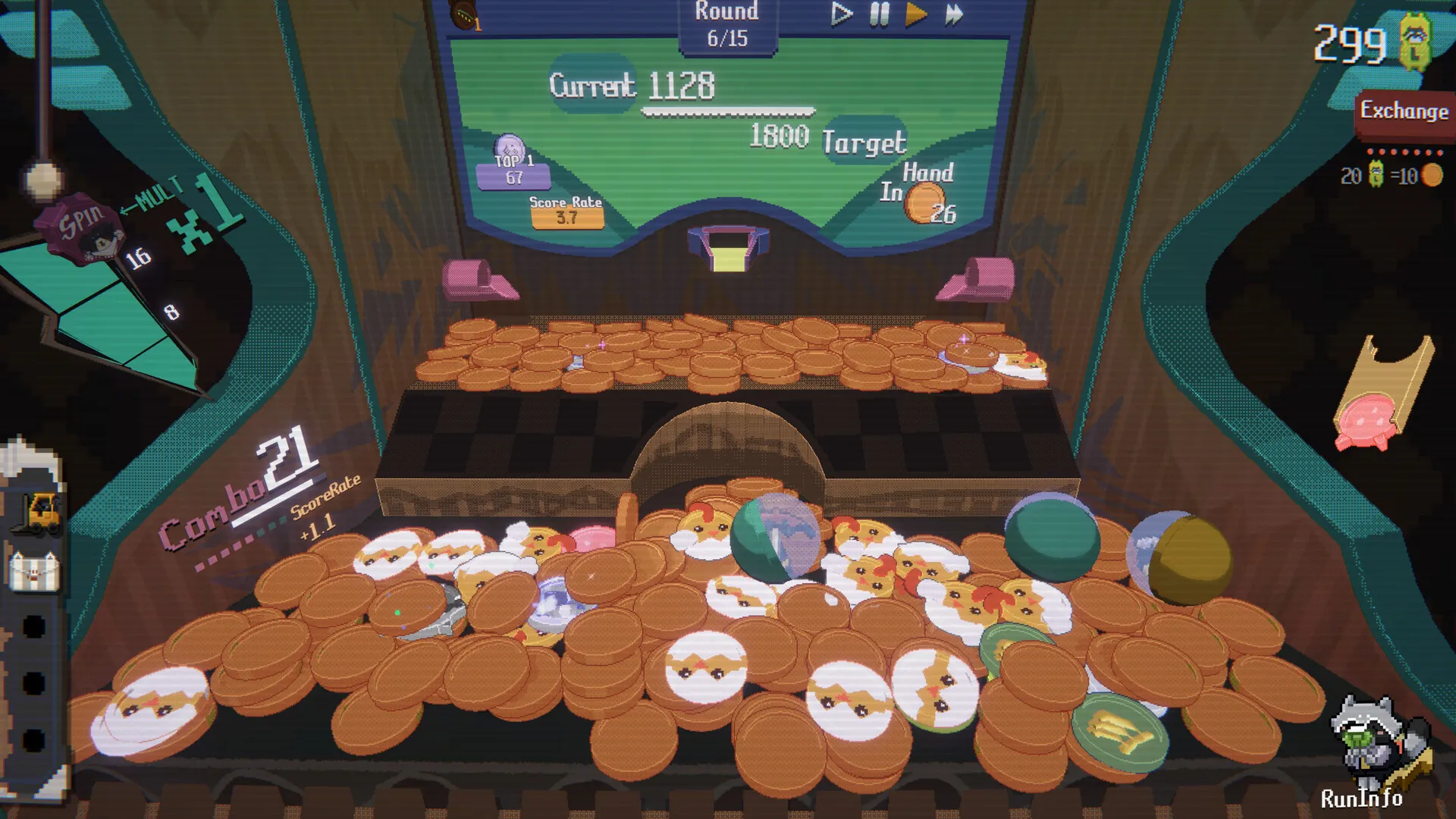
As runs progress, the platform fills with coins, relics, and obstacles.
H3: Density Effects
High coin density can create unpredictable physics interactions.
Coins may:
- Become trapped in stacks
- Bounce unpredictably
- Block key rewards
H4: Loss of Precision
Even well-planned drops may fail due to platform congestion.
This reintroduces randomness.
6. Risk-Reward Decisions
To manage randomness, RACCOIN includes mechanics that encourage risk-taking.
H3: High-Risk Drops
Certain targets offer large rewards but require precise coin placement.
Examples include:
- Rare relic tokens
- Jackpot multipliers
- Special chain triggers
H4: List – Risk Evaluation Factors
Players must consider:
- Coin supply remaining
- Platform stability
- Potential chain reactions
- Upgrade synergy
These decisions form the strategic heart of the game.
7. Late-Game Power Builds
In powerful runs, upgrade synergies can reach extreme levels.
H3: Automated Coin Cascades
Some builds generate massive coin chains automatically.
Examples include:
- Auto-drop triggers
- Infinite duplication loops
- Multi-push chain reactions
H4: Strategy Replaced by Spectacle
At this stage, the player often watches rather than actively participates.
The system becomes self-sustaining.
8. The Random Collapse Event
Despite powerful builds, runs can collapse unexpectedly due to physics randomness.
H3: Unstable Coin Stacks
Large stacks may shift unpredictably when the platform moves.
H4: Sudden Resource Loss
A single unlucky drop may:
- Break a chain reaction
- Scatter key coins
- Waste critical resources
This volatility creates dramatic moments but can feel unfair.
9. Player Psychology and Perceived Control
A key design challenge in RACCOIN is maintaining the illusion of player control.
H3: The Importance of Agency
Players must feel that success results from their decisions rather than pure luck.
H4: List – Signs of Healthy Balance
A well-balanced run allows players to:
- Predict approximate outcomes
- Influence coin clusters
- Recover from mistakes
When randomness dominates, frustration increases.
10. Balancing Randomness and Strategy
The long-term success of RACCOIN depends on maintaining equilibrium between its two core systems.
H3: Randomness as Excitement
Physics unpredictability creates:
- Suspenseful drops
- Unexpected chain reactions
- Memorable moments
H4: Strategy as Stability
Strategic upgrades provide:
- Consistent progress
- Meaningful decisions
- Replayable builds
Future design improvements might include:
- Physics stabilizers for crowded platforms
- Player tools to reposition coins
- Upgrades that reduce randomness without eliminating it
These systems could strengthen strategic depth while preserving arcade excitement.
Conclusion
RACCOIN: Coin Pusher Roguelike is an inventive hybrid that blends arcade mechanics with roguelike progression. The game’s unique identity emerges from the tension between unpredictable coin physics and player-driven strategy.
This balance creates moments of excitement, surprise, and dramatic comeback potential. Yet when randomness overwhelms player agency, the strategic layer risks losing meaning. Conversely, when upgrades become too powerful, the chaotic charm of coin pushing disappears.
The true challenge for RACCOIN is maintaining equilibrium between these forces. When randomness and strategy coexist harmoniously, the game transforms from a simple arcade simulation into a deeply engaging roguelike experience.